Introduction
At the beginning of 2020, an epidemic broke out in China. To stop the epidemic, the government called for people to stay at home and isolate themselves, which forced many industries to stop working. But in order not to neglect students’ studies, the new education mode of “Live teaching” has been implemented on a large scale. Through the Internet and big data, today’s classroom breaks the shackles of time and space, and can carry out customized teaching anytime and anywhere. This is the embodiment of the vigorous development of digital economy in the field of education. Teachers, as one of the most direct workers in the education industry, are bound to be greatly affected. This blog will outline the changes that teachers have experienced in a digital economy environment.

Known changes
As a Chinese, I have experienced this kind of “live teaching” several times on some live platforms. The most intuitive feeling for me is convenience. This kind of teaching method avoids commuting time. And not only live can learn, watching playback is also a way of learning. For teachers, convenience is also a great advantage. It’s a general benefit to be free of commuting time. Secondly, the possibility of working at home is greatly increased. Compared with the podium, home is a more comfortable working environment. A study (Chandrasekar, K. 2011) shows that a comfortable working environment can improve productivity, and the quality of teaching is undoubtedly the “productivity” of the profession of teachers. There is no doubt that high comfort can make teachers put more energy into teaching.
New technologies give birth to new products. The emergence of smartphones, tablets and other products not only brings convenience to teachers. Compared with traditional teaching, these new products are obviously more beneficial to health on a physiological level. Chalkboards are still used in many places around the world, and in the process there is inevitably a lot of chalk ash, even if dustproof chalk is used (Lin, C. C., Lee, M. K., & Huang, H. L. 2015). This seriously affects the health of teachers, but the popularity of touch screen technology can avoid this kind of occupational disease. It protects the health of not only teachers but also students.

In the context of digital economy, it is obvious that the new education model has changed teachers. As stakeholders in this change, they have also been greatly improved. Some of the effects on students have been mentioned above. For parents, they have more time to accompany their children and can know their children’s learning situation more directly. This will improve parents’ perception of teachers and schools. Paperless teaching can reduce the production of paper, which is a kind of environmental protection and conforms to the government’s social service function. The government could improve its reputation if it promoted the new teaching model. Reducing the cost of education is another change that cannot be ignored.
Possible changes in the future
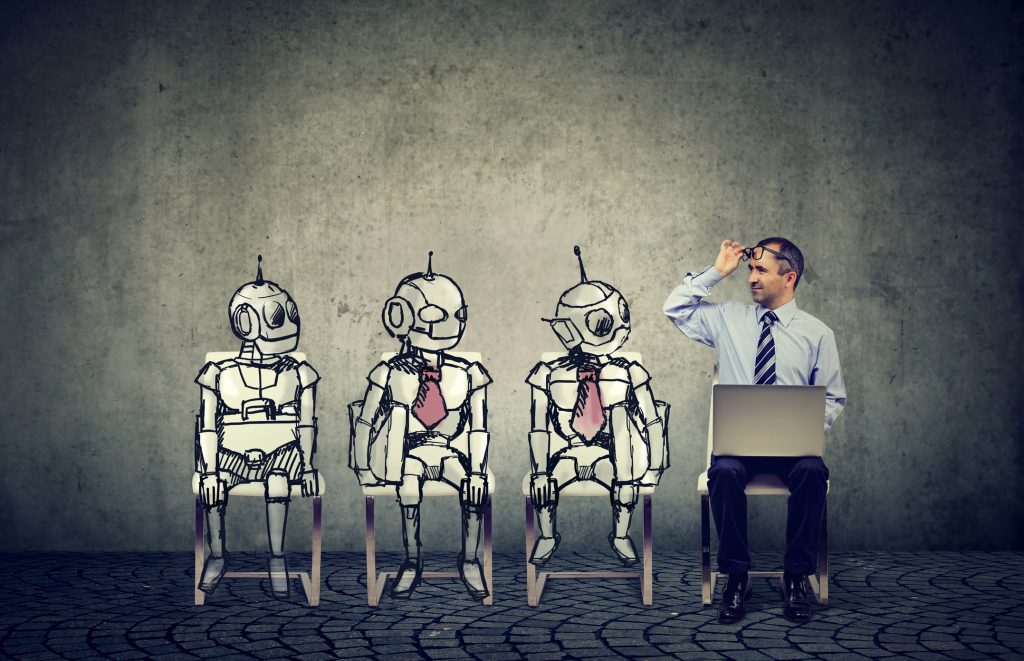
Unfortunately, most jobs will be replaced by robots in the future, which is an inevitable trend. A study by University of Oxford (Perry, 2016) said that in fact, robots and AI will make human lose 47% of their jobs in the next 25 years. But the good news is that many studies (Harper, 2018) suggest that teachers may never be replaced by robots. Combined with the learning of this module in MOOC, I also believe that teachers, as a highly interactive profession, will always exist both emotionally and rationally. In the field of education, perhaps the AI can only play a supplementary role, rather than as a leader. For those unemployed because of the digital economy, it may be their way to solve the problem by constantly learning and improving themselves and elevating their work technology to the spiritual level.
Finally, I want to mention virtual reality. I believe this is one of the greatest technologies to come out of the digital economy. Although I haven’t experienced VR, it has been common in film and television works. If VR technology is applied in the field of education on a large scale in the future, it will bring a revolutionary change to the educational work, which cannot be compared with online teaching and other methods. What I can imagine at present is that under the VR mode, teachers can create a more realistic teaching environment without leaving home, so as to get better teaching feedback and greatly improve students’ interest in learning. Data shows that VR is particularly popular among children, and 70% of kids (8-15 years old) are interested in VR. More information about the influence of VR on teaching can be seen at this article by Melody Buschur (2018).
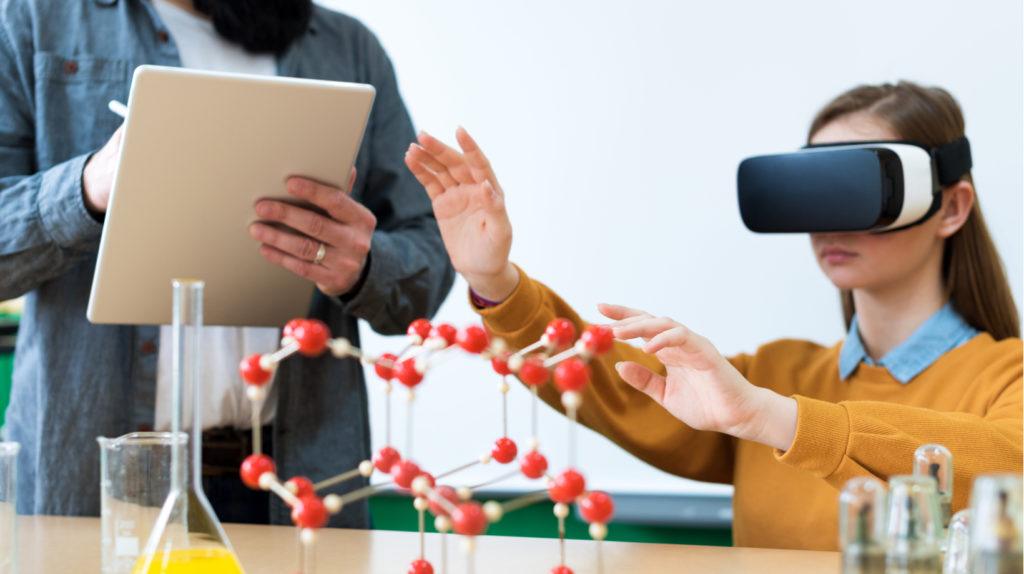
Keep in mind, the human brain can remember 20% of auditory information, 30% of visual information, and up to 90% of what we experience, whether real or simulated.
Conclusion
This article introduces some of the changes that the digital economy has made to teachers, and gives a brief account of some of the personal insights about these changes. Finally, no matter what the environment, the ability of teachers themselves should be excellent, otherwise the convenience brought by the digital economy will not play its due value.
Reference
Buschur, M. (2018). New Frontiers: The Growing Impact of Virtual Reality in Education. [online] Schoology.com. Available at: https://www.schoology.com/blog/new-frontiers-growing-impact-virtual-reality-education.
Chandrasekar, K. (2011). Workplace environment and its impact on organisational performance in public sector organisations. International journal of enterprise computing and business systems, 1(1), 1-19.
Harper, A. (2018). Will robots replace teachers in the future?. [online] Education Dive. Available at: https://www.educationdive.com/news/will-robots-replace-teachers-in-the-future/542239/.
Lin, C. C., Lee, M. K., & Huang, H. L. (2015). Effects of chalk use on dust exposure and classroom air quality. Aerosol and Air Quality Research, 15(7), 2596-2608.
Perry, P. (2016). 47% of jobs will vanish in the next 25 years, say Oxford University researchers. [online] Big Think. Available at: https://bigthink.com/philip-perry/47-of-jobs-in-the-next-25-years-will-disappear-according-to-oxford-university.
 BEMM129 Digital Business Models