Be yourself; Everyone else is already taken.
— Oscar Wilde.
This is the first post on my new blog. I’m just getting this new blog going, so stay tuned for more. Subscribe below to get notified when I post new updates.
Be yourself; Everyone else is already taken.
— Oscar Wilde.
This is the first post on my new blog. I’m just getting this new blog going, so stay tuned for more. Subscribe below to get notified when I post new updates.
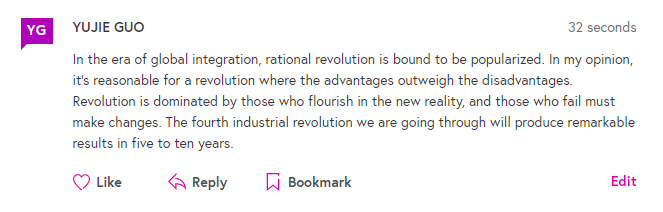
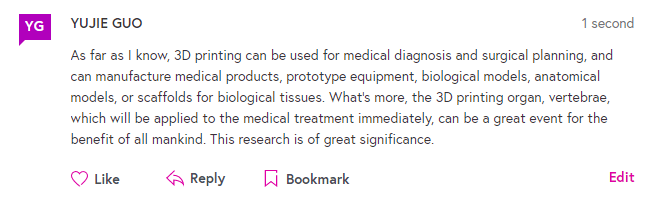
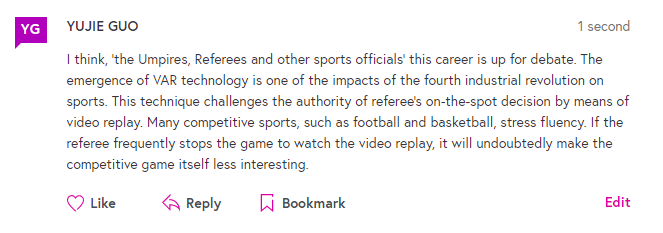
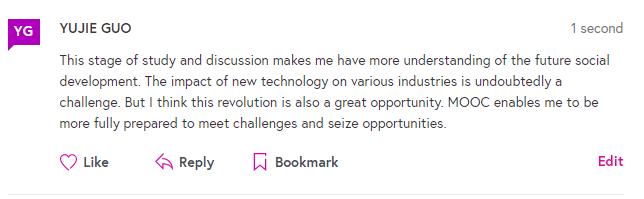
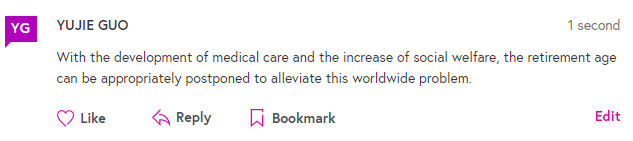
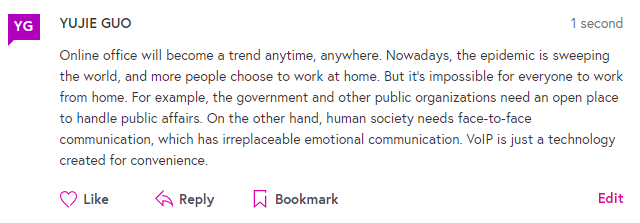
Digital Business Models is an interesting course that many times requires online learning. This was my first experience of an online MOOC. There are many interesting topics in MOOC, such as 3D printing, the impact of the digital revolution on existing occupations, the spread of automation and online work. People can explore the article in the comments. This makes me have more understanding and interest in the subject and can be further studied when I consult relevant materials.
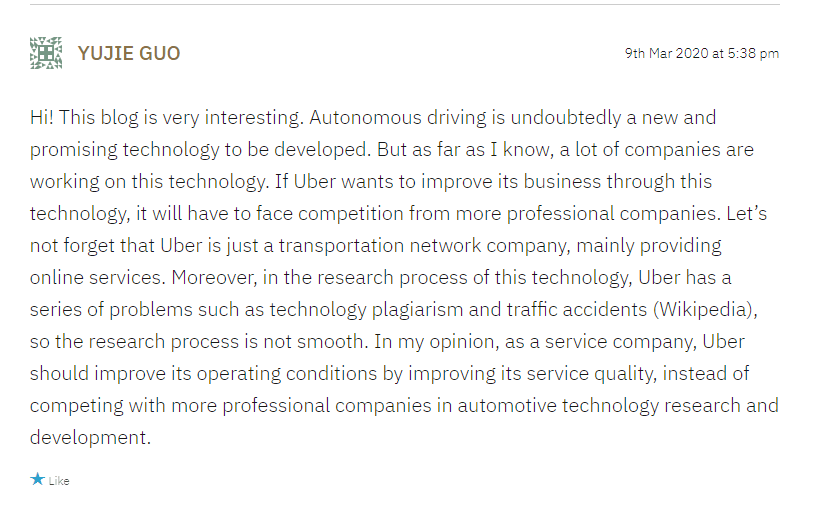
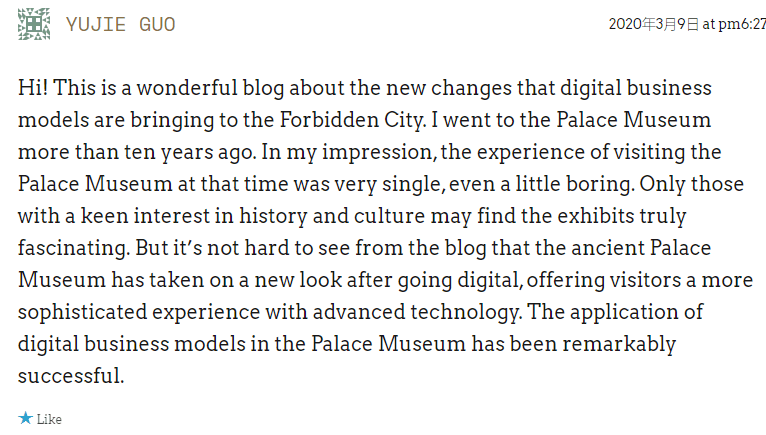
Another interesting thing about this course is that it does module evaluation by blogging. We can share our views on the digital business model. Mela’s blog, for example, can lead to thinking about the role of a future teacher. And I quite agree with the words of “having a job for life having the ability to maintain and renew the right skills through life learning” in her blog. As another example, Nicolette mentioned Uber’s development in his blog. Uber has no doubt benefited from the rise of digitalization. However, it is worrisome that Uber still faces many security problems, which are also brought by new technologies. Liu’s blog about the digital transformation of the Forbidden City is also very interesting. It seems attractive to experience the historic Forbidden City in a new media way.
Digitalization is an inevitable trend, which will enable the further development of human society. Digital technology upends traditional business and reshapes business ecology. Everyone has different perspectives and pretentious insights in this direction, but there must be a business vision for the digital age, or all the strategies, controversies, and choices will be irrelevant. The failures of Kodak and Nokia are two case in point (CRISTINA, n.d.). On the other hand, there is a need to be open to digital technology, which needs to be constantly explored and developed to meet the application needs of transaction, productivity and creativity. No matter for job seekers or managers, any decision in the transition period is uncertain. Only by keeping an open mind to technology and business can we move in the right direction. As far as I am concerned, this course has given me new thoughts in the process of job hunting. The digital age brings more opportunities and challenges. What we have to do is to grasp the opportunities and actively respond to the challenges.
Reference
Alexander, N. (2020). The Elements of Uber’s Digital Business Model that Make and Break It. WordPress.com. Retrieved 5 April 2020, from https://nicolettealexander.wordpress.com/2020/03/05/the-elements-of-ubers-digital-business-model-that-make-and-break-it/.
CRISTINA, I. Why Did Kodak Fail and What You Can Learn from its Demise-BRAND MINDS 2019. Brand Minds. Retrieved 5 April 2020, from https://brandminds.ro/why-did-kodak-fail-and-what-you-can-learn-from-its-demise/.
CRISTINA, I. Why did Nokia fail? New reasons will surprise you! – Brand Minds 2019. Brand Minds. Retrieved 5 April 2020, from https://brandminds.ro/why-did-nokia-fail/.
Liu, Z. (2020). Classical vs. Modern: Forbidden City successfully transforms with digital business. WordPress.com. Retrieved 5 April 2020, from https://xavierliu2526photography.photo.blog/2020/03/06/classical-vs-modern-forbidden-city-successfully-transforms-with-digital-business/.
TEACHFIRST OR TECHNOLOGY FIRST? THE ROLE OF TEACHING & OUR DIGITAL ECONOMY. WordPress.com. (2020). Retrieved 5 April 2020, from https://mpbmsc.wordpress.com/2020/02/17/teachfirst-or-technology-first-the-role-of-teaching-our-digital-economy/.

Digitization has been an important strategy for Starbucks’ global growth. As early as 2016, Starbucks proposed the “digital flywheel” strategy (Dignan, 2017). Through AI technology and big data analysis to understand user needs, Starbucks maximizes and optimizes user experience, and can develop new products based on consumption data and use them in business decisions such as site selection. Specifically, it involves four modules: Starbucks membership system, mobile payment, personalized experience and mobile purchase experience.
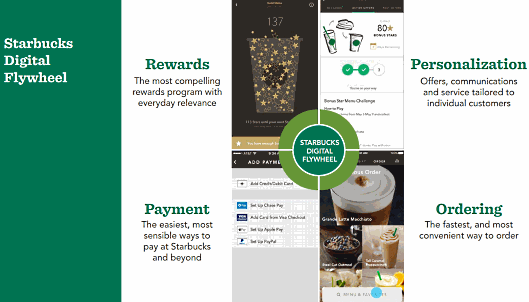
In the Chinese market, Starbucks entered Taiwan in 1998 and mainland China in the following year. By 2018, there were over 3500 stores in China (Statista, 2020). Despite the rapid growth of Starbucks’ business and the popularity of the “third space” concept, Starbucks still has shortcomings in personalized experience and mobile purchase experience. In 2019, Starbucks China adjusted its management structure, digital innovation division and retail division in line with the “digital flywheel” strategy.
Module 1: Rewards
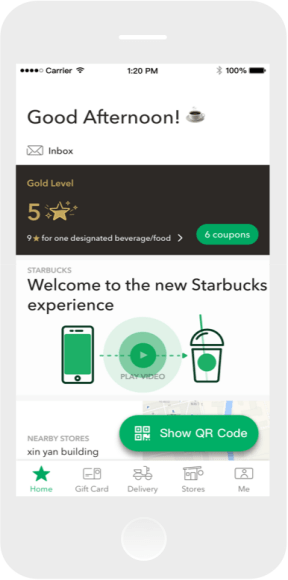
The membership system of Starbucks mainly sets members at three different levels, and trains users’ usage habits and improves loyalty through continuous membership rights and membership fluctuation mechanism. Loyalty membership program not only promotes users’ consumption in Starbucks, but also improves users’ retention rate and lifetime value. In China, consumers only need to buy a membership card to register on the application in one minute and enjoy benefits. Membership points are calculated by the simplest “Star”. If people spend ¥50, they can get a star. When people have 4 stars, their membership rights can be upgraded to Green Tier. And 20 stars can make them achieve Gold Tier (Starbucks China, 2020). Users can view the number and level of stars on the application at any time. Membership upgrade system is easy to understand.
Module 2: Payment
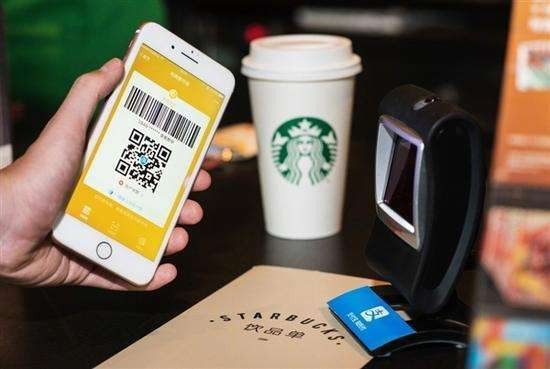
In 2011, Starbucks launched the mobile payment function. As the “third space” behind family and work, customers can enjoy a very pleasant experience through Starbucks wallet. This wallet can be connected to credit card, Apple Pay, PayPal, etc. More importantly, the wallet is associated with the bar-code payment system. Customers only need to scan the bar-code, and do not need to pay cash at all. China’s mobile payment technology is very mature, even in the forefront of the world. Starbucks, through cooperation with Alipay and Wechat, brings customers a very convenient consumption experience (Zhou, 2017).
Module 3: Personalization
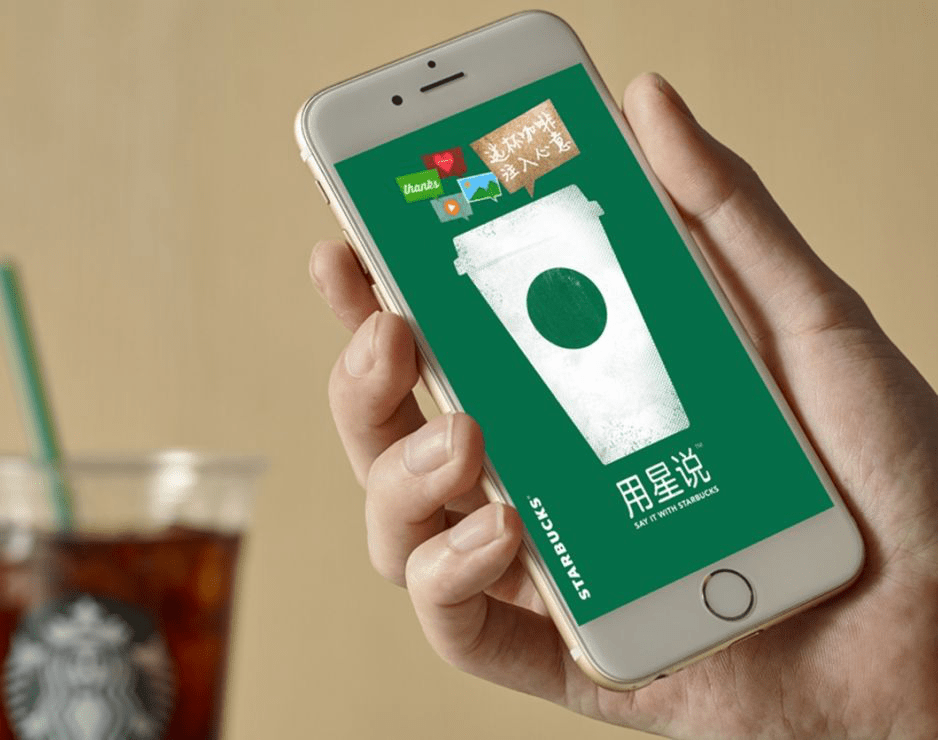
Starbucks has its own mobile application. The background data system of the application will continuously collect various data information of members, including basic information, preferences, consumption records, client usage habits, third-party data and scenario data. Data analysts will conduct in-depth analysis of user data to realize personalized marketing effectively combined with the scene. Starbucks China, in conjunction with social networking giant Tencent, has launched a small program called “Say it with Starbucks” on WeChat to strengthen user engagement. Each consumer can click to see the location of the nearest store, coupon information, and share it with WeChat friends (Stories.starbucks.com, 2017). This really enables customized push.
Module 4: Ordering

Although we are used to using mobile app to order meals now, it was not common in 2009. The Starbucks mobile card app, launched in September 2009, enables consumers to easily manage their Starbucks cards via mobile devices. With the Starbucks mobile card app, customers can reload their card balance directly from their smart phone, check the status of Starbucks bonus, find the nearby Starbucks store, and realize mobile ordering. In this way, users in a hurry do not need to wait in line, thus saving time. Starbucks has also cooperated with Uber (Chickowski, 2019). Users can directly enter Uber taxi interface through Starbucks app. This further enhances the user experience. In China, Starbucks and Alibaba have reached cooperation to provide “Starbucks Delivers” services in 35 cities. Starbucks also shares its membership system with Eleme, a “take out” mobile app owned by Alibaba Group. Users can also accumulate Starbucks membership points when placing an order in Eleme. Starbucks launched the “Starbucks Now” service, which realized the pre-order service of placing an order with mobile phone and getting it from the store (Gustafson, 2019). On the way to work, customers can order Starbucks coffee near the office building and pick it up at the store, which saves the time of queuing and waiting for production.
Starbucks is turning a profit by executing its innovation strategy with digital flywheels. In fiscal 2018, its revenue grew to $24.7 billion (Chickowski, 2019). Meanwhile, in the first quarter of fiscal 2019, the company’s revenue grew by 9%, and its stock price has been rising steadily. At the 2018 shareholder meeting, current CEO Johnson identified the digital flywheel as one of the three strategic business initiatives that have propelled Starbucks forward. There is no doubt that the digital flywheel, a digital business model, has made a great contribution to Starbucks.
Reference:
Chickowski, E. (2019). Starbucks’ Digital Flyweel Strategy Continues to Pay Off – Digirupt.io. [online] Digirupt.io. Available at: https://digirupt.io/starbucks-digital-flyweel-strategy-continues-to-pay-off/.
Dignan, L. (2017). Starbucks to step up rollout of ‘digital flywheel’ strategy | ZDNet. [online] ZDNet. Available at: https://www.zdnet.com/article/starbucks-to-step-up-rollout-of-digital-flywheel-strategy/.
Gustafson, I. (2019). Starbucks Introduces New ‘Starbucks Now’ Retail Experience – CStore Decisions. [online] CStore Decisions. Available at: https://cstoredecisions.com/2019/07/31/starbucks-introduces-new-starbucks-now-retail-experience/.
Starbucks China. (2020). Starbucks Rewards™ – Earn Stars for Rewards. [online] Available at: https://www.starbucks.com.cn/en/account/starbucks-rewards/.
Statista. (2020). Starbucks: number of stores in China 2018 | Statista. [online] Available at: https://www.statista.com/statistics/277795/number-of-starbucks-stores-in-china/.
Stories.starbucks.com. (2017). Starbucks. [online] Available at: https://stories.starbucks.com/press/2017/starbucks-partners-with-weixin-to-launch-social-gifting-in-china/.
Zhou, K. (2017). Alipay is now available at all Chinese Starbucks stores – Pandaily. [online] Pandaily. Available at: https://pandaily.com/alipay-is-now-available-at-all-chinese-starbucks-stores/.
Introduction
At the beginning of 2020, an epidemic broke out in China. To stop the epidemic, the government called for people to stay at home and isolate themselves, which forced many industries to stop working. But in order not to neglect students’ studies, the new education mode of “Live teaching” has been implemented on a large scale. Through the Internet and big data, today’s classroom breaks the shackles of time and space, and can carry out customized teaching anytime and anywhere. This is the embodiment of the vigorous development of digital economy in the field of education. Teachers, as one of the most direct workers in the education industry, are bound to be greatly affected. This blog will outline the changes that teachers have experienced in a digital economy environment.

Known changes
As a Chinese, I have experienced this kind of “live teaching” several times on some live platforms. The most intuitive feeling for me is convenience. This kind of teaching method avoids commuting time. And not only live can learn, watching playback is also a way of learning. For teachers, convenience is also a great advantage. It’s a general benefit to be free of commuting time. Secondly, the possibility of working at home is greatly increased. Compared with the podium, home is a more comfortable working environment. A study (Chandrasekar, K. 2011) shows that a comfortable working environment can improve productivity, and the quality of teaching is undoubtedly the “productivity” of the profession of teachers. There is no doubt that high comfort can make teachers put more energy into teaching.
New technologies give birth to new products. The emergence of smartphones, tablets and other products not only brings convenience to teachers. Compared with traditional teaching, these new products are obviously more beneficial to health on a physiological level. Chalkboards are still used in many places around the world, and in the process there is inevitably a lot of chalk ash, even if dustproof chalk is used (Lin, C. C., Lee, M. K., & Huang, H. L. 2015). This seriously affects the health of teachers, but the popularity of touch screen technology can avoid this kind of occupational disease. It protects the health of not only teachers but also students.

In the context of digital economy, it is obvious that the new education model has changed teachers. As stakeholders in this change, they have also been greatly improved. Some of the effects on students have been mentioned above. For parents, they have more time to accompany their children and can know their children’s learning situation more directly. This will improve parents’ perception of teachers and schools. Paperless teaching can reduce the production of paper, which is a kind of environmental protection and conforms to the government’s social service function. The government could improve its reputation if it promoted the new teaching model. Reducing the cost of education is another change that cannot be ignored.
Possible changes in the future
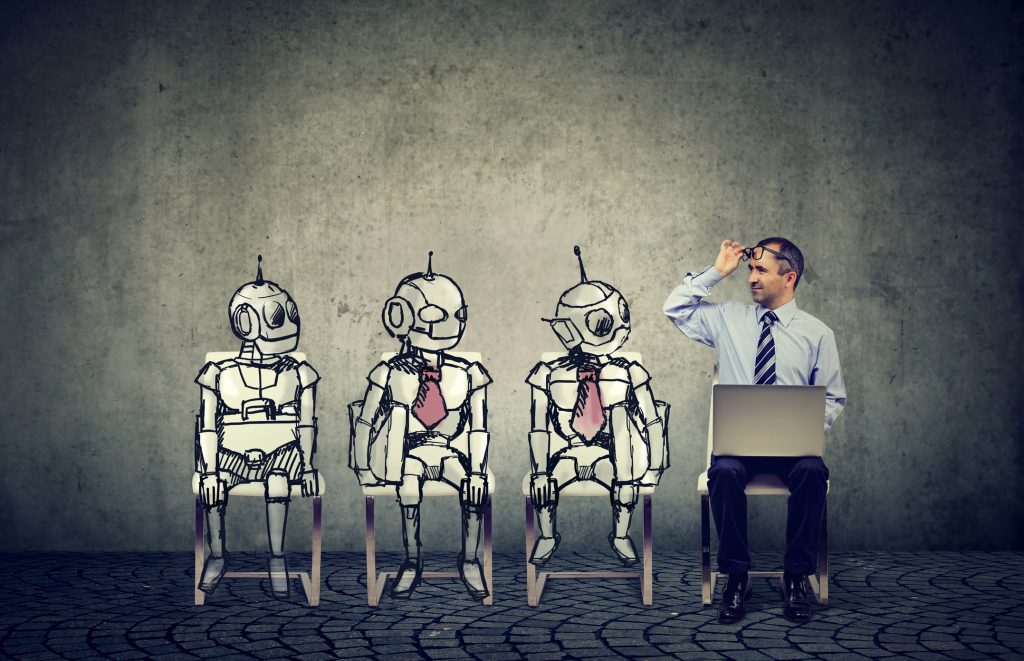
Unfortunately, most jobs will be replaced by robots in the future, which is an inevitable trend. A study by University of Oxford (Perry, 2016) said that in fact, robots and AI will make human lose 47% of their jobs in the next 25 years. But the good news is that many studies (Harper, 2018) suggest that teachers may never be replaced by robots. Combined with the learning of this module in MOOC, I also believe that teachers, as a highly interactive profession, will always exist both emotionally and rationally. In the field of education, perhaps the AI can only play a supplementary role, rather than as a leader. For those unemployed because of the digital economy, it may be their way to solve the problem by constantly learning and improving themselves and elevating their work technology to the spiritual level.
Finally, I want to mention virtual reality. I believe this is one of the greatest technologies to come out of the digital economy. Although I haven’t experienced VR, it has been common in film and television works. If VR technology is applied in the field of education on a large scale in the future, it will bring a revolutionary change to the educational work, which cannot be compared with online teaching and other methods. What I can imagine at present is that under the VR mode, teachers can create a more realistic teaching environment without leaving home, so as to get better teaching feedback and greatly improve students’ interest in learning. Data shows that VR is particularly popular among children, and 70% of kids (8-15 years old) are interested in VR. More information about the influence of VR on teaching can be seen at this article by Melody Buschur (2018).

Keep in mind, the human brain can remember 20% of auditory information, 30% of visual information, and up to 90% of what we experience, whether real or simulated.
Conclusion
This article introduces some of the changes that the digital economy has made to teachers, and gives a brief account of some of the personal insights about these changes. Finally, no matter what the environment, the ability of teachers themselves should be excellent, otherwise the convenience brought by the digital economy will not play its due value.
Reference
Buschur, M. (2018). New Frontiers: The Growing Impact of Virtual Reality in Education. [online] Schoology.com. Available at: https://www.schoology.com/blog/new-frontiers-growing-impact-virtual-reality-education.
Chandrasekar, K. (2011). Workplace environment and its impact on organisational performance in public sector organisations. International journal of enterprise computing and business systems, 1(1), 1-19.
Harper, A. (2018). Will robots replace teachers in the future?. [online] Education Dive. Available at: https://www.educationdive.com/news/will-robots-replace-teachers-in-the-future/542239/.
Lin, C. C., Lee, M. K., & Huang, H. L. (2015). Effects of chalk use on dust exposure and classroom air quality. Aerosol and Air Quality Research, 15(7), 2596-2608.
Perry, P. (2016). 47% of jobs will vanish in the next 25 years, say Oxford University researchers. [online] Big Think. Available at: https://bigthink.com/philip-perry/47-of-jobs-in-the-next-25-years-will-disappear-according-to-oxford-university.
This is an example post, originally published as part of Blogging University. Enroll in one of our ten programs, and start your blog right.
You’re going to publish a post today. Don’t worry about how your blog looks. Don’t worry if you haven’t given it a name yet, or you’re feeling overwhelmed. Just click the “New Post” button, and tell us why you’re here.
Why do this?
The post can be short or long, a personal intro to your life or a bloggy mission statement, a manifesto for the future or a simple outline of your the types of things you hope to publish.
To help you get started, here are a few questions:
You’re not locked into any of this; one of the wonderful things about blogs is how they constantly evolve as we learn, grow, and interact with one another — but it’s good to know where and why you started, and articulating your goals may just give you a few other post ideas.
Can’t think how to get started? Just write the first thing that pops into your head. Anne Lamott, author of a book on writing we love, says that you need to give yourself permission to write a “crappy first draft”. Anne makes a great point — just start writing, and worry about editing it later.
When you’re ready to publish, give your post three to five tags that describe your blog’s focus — writing, photography, fiction, parenting, food, cars, movies, sports, whatever. These tags will help others who care about your topics find you in the Reader. Make sure one of the tags is “zerotohero,” so other new bloggers can find you, too.





 BEMM129 Digital Business Models